What is a Hoist Crane Mechanism?
A hoist crane is heavy equipment used to lift loads by pulling or pushing them using a system of chains, cables, or steel ropes connected to a drive motor. An efficient hoist crane mechanism enables faster, safer, and more energy-efficient operations. Hoists are commonly used in industries such as construction, warehousing, and manufacturing plants to easily move heavy and large items.
Main Components in the Hoist Crane System
To achieve optimal crane performance, understanding the components within the hoist system is essential. Each part plays a crucial role in maintaining overall performance.
- Drive Motor: The motor is the core of the hoist crane system, converting electrical energy into mechanical energy to move loads. Motors with variable speed or frequency control allow more precise control of crane speed and movement, reducing wear and improving durability.
- Lifting Chain or Cable: This component is responsible for lifting loads. High-quality steel cables and strong lifting chains are necessary to ensure strength and reliability. This system must be kept clean to prevent premature wear.
- Electronic Control: Automated control systems play a vital role in ensuring precise and safe crane movement. With PLC systems and inverters, operators can adjust speed more smoothly, reducing the risk of sudden or uncontrolled load movement.
- Crane Structure Design: This includes structural components such as drums and rails that support the entire hoist system. Strong and lightweight design is essential to enable smooth and efficient load movement.
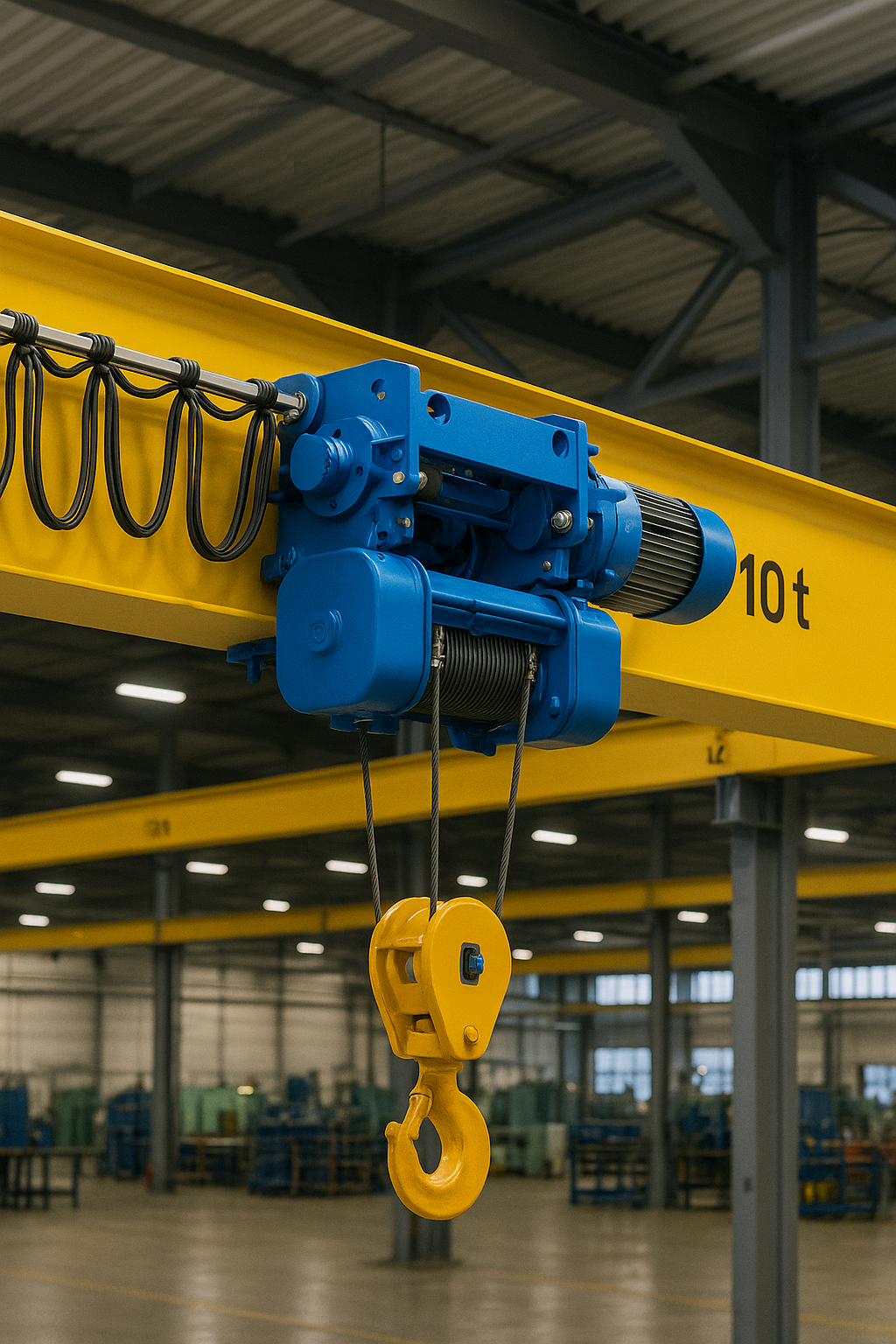
Hoist Crane Mechanism
Factors Determining Efficient Hoist Crane Performance
Hoist crane performance is significantly influenced by various technical and operational factors. Optimizing each element in the system will result in better performance, energy savings, and simpler maintenance.
- Speed Control and Accuracy: Crane speed can be adjusted with modern control systems like VFD (Variable Frequency Drive) or inverters, which regulate motor frequency, producing more precise movement while avoiding shocks or jolts that could damage the load or the crane itself.
- Use of Sensors and IoT Technology: Using load sensors, position sensors, and IoT systems enables real-time monitoring and early problem detection. These sensors help optimize operational speed and reduce the possibility of damage.
- Load Capacity: A crane that is too large for the load being lifted can increase energy consumption, while one that is too small risks damage. Match crane capacity with load type and weight to achieve higher efficiency.
The Importance of Maintenance in Maintaining Hoist Crane Performance
An efficient hoist crane system requires regular maintenance and periodic monitoring to ensure all components work properly and in optimal condition. Some important maintenance steps include:
- Cable and Chain Inspection: Regularly inspect cables or chains to ensure there is no wear, damage, or overload. Worn or frayed cables can cause system failure.
- System Cleaning and Lubrication: Cleaning components such as rails, drums, and crane motors to avoid dirt and dust buildup that can accelerate damage. Lubrication is also important to reduce friction between moving parts.
- Replacement of Damaged Components: Ensuring all worn or damaged components are replaced immediately. This will prevent further damage and keep the crane operating safely.
Benefits of Using Efficient Hoist Cranes
An efficient hoist crane system requires regular maintenance and periodic monitoring to ensure all components work properly and in optimal condition. Some important maintenance steps include:
- Increased Productivity: Efficient hoist systems enable faster load lifting, increasing crane operational time and overall productivity.
- Energy Savings: Using motors with variable control and automation systems can reduce energy usage, which in turn reduces operational costs.
- Safety and Reliability: Efficient hoist cranes are equipped with advanced safety systems, such as limit switches and load sensors, to avoid accident risks from overload or operational errors.
- Lower Maintenance Costs: Well-maintained cranes tend to experience fewer breakdowns and require fewer component replacements, leading to reduced long-term maintenance costs.
Conclusion
Efficient hoist crane mechanisms not only improve performance and productivity but also provide many other benefits such as energy savings, better safety, and lower operational costs. By implementing the latest technologies, proper maintenance, and using more precise automated systems, companies can ensure hoist cranes work optimally and continue to provide reliable performance for a long time.